

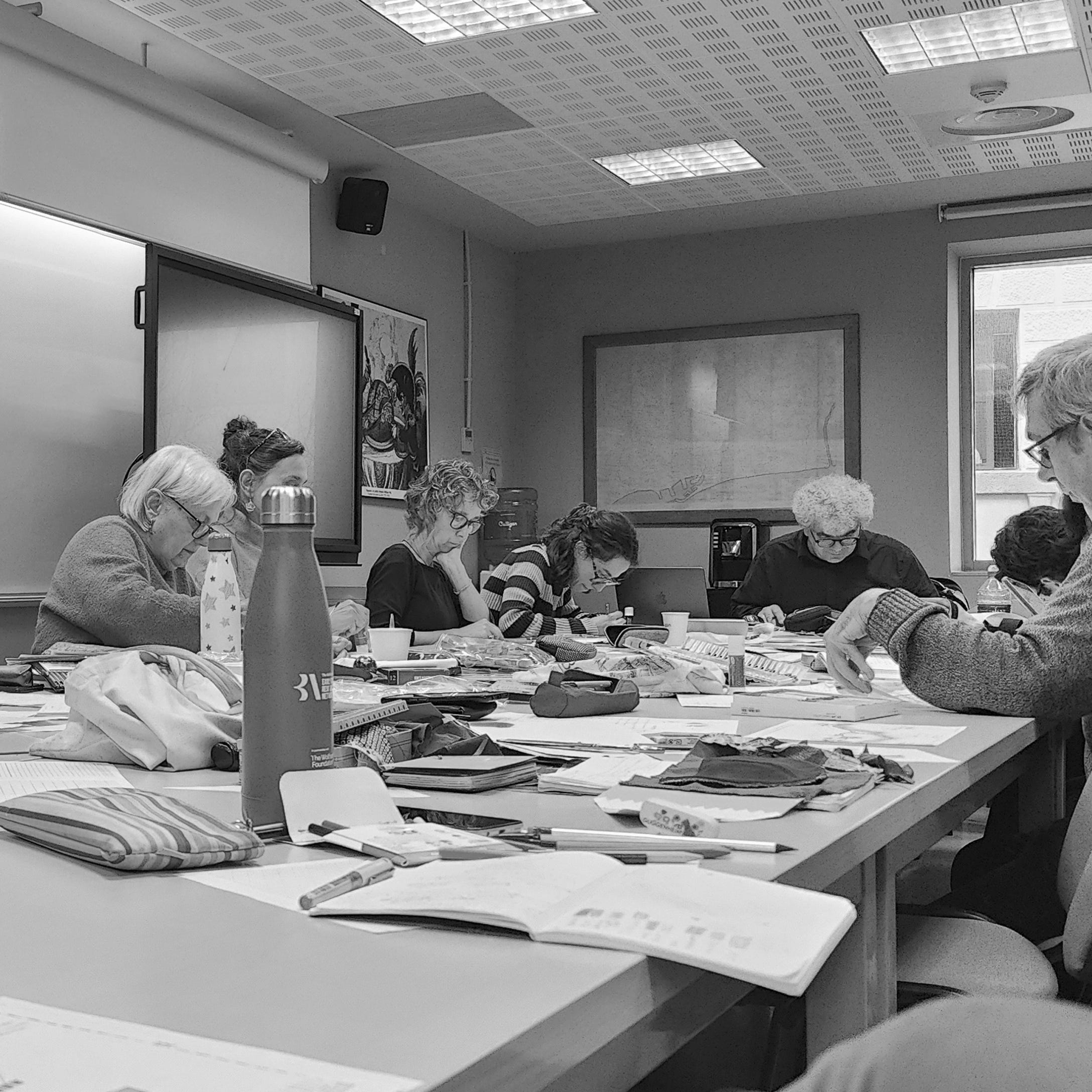
A couple of months ago, I took part in a critical cartography workshop led by Philippe Rekacewicz at Universitat de Barcelona. The exercise sounded simple enough: map something meaningful to you: an experience, a memory, an event. We had one hour; enough time to think, sketch, and produce something that captured a spatial reflection, but not much more than that.
The first idea that came to mind was an expression we throw around without thinking: I know it like the back of my hand. It’s a phrase we use to describe deep familiarity, total closeness with something or someone. But honestly, I’m not sure I could describe the back of my own hand in any real detail. We say it all the time, and we rarely test it.
Since this was a workshop about critical cartography, the second thought followed naturally: my spatial relationship with Barcelona, the city I’ve lived in for the past couple of years. How well do I actually know it? At what point can I say I know it like the back of my hand? Could I draw Barcelona from memory, with any real precision?
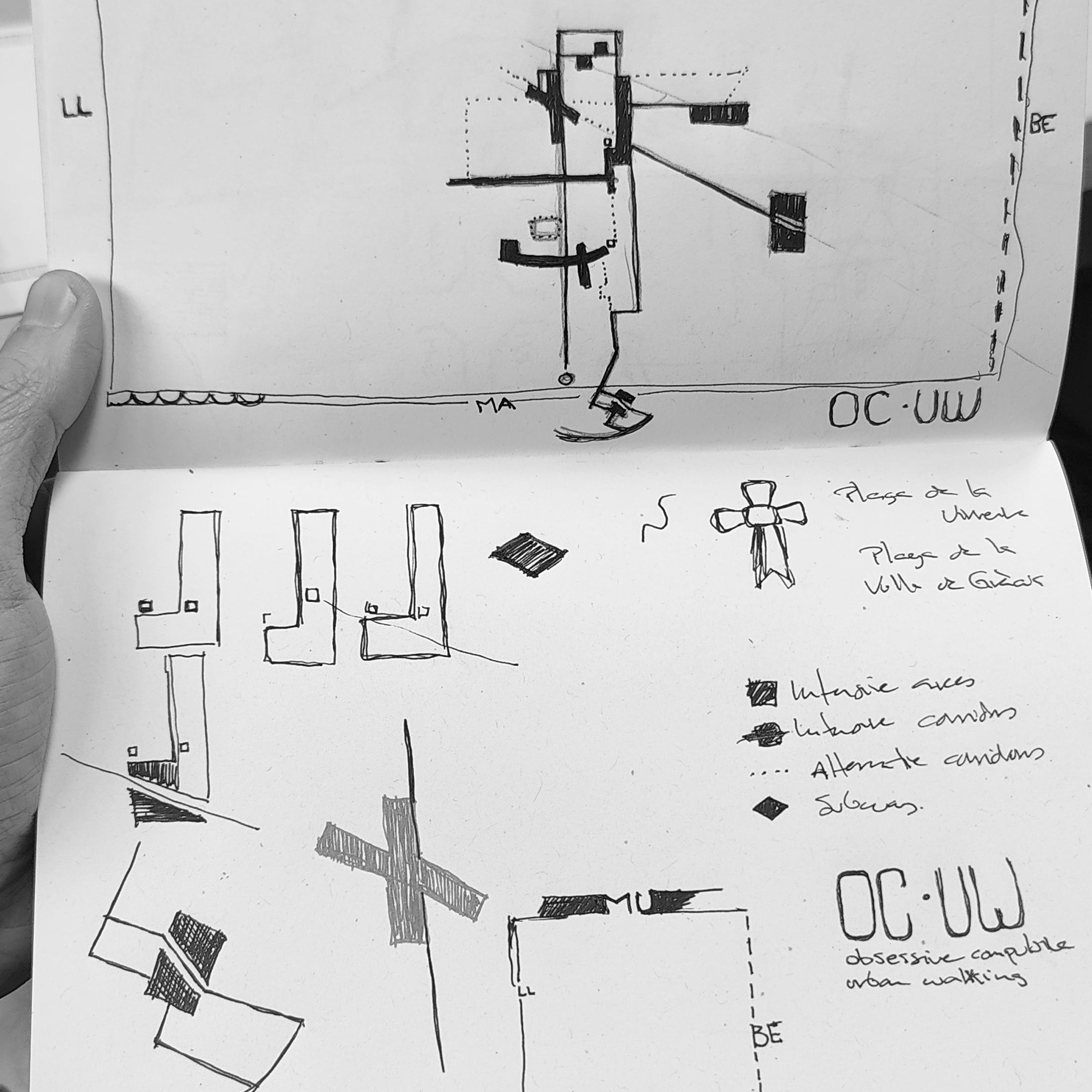
So I started sketching, as fast as the two ideas — the hand, the city — folded into each other. And almost immediately I realized I couldn’t draw Barcelona in any meaningful detail. I could get the outer edges right: Collserola and the coastline, the Besòs and the Llobregat marking the limits. I could rough in a few of the main arteries, Diagonal, Gran Via, Passeig de Gràcia, Passeig de Sant Joan, a ring road or two. But past that, nothing held. Not the broken, tangled streets of the Raval or the Born, not the block count of the Eixample, not the urban fabric of Sants or Poblenou.
And yet the more I pushed on the sketch, something else started to surface. A few insistent lines. A handful of recurring landmarks. Connections that kept repeating themselves no matter how I approached the page. I stopped trying to remember the city and just let my hand move; a kind of muscle memory taking over where conscious recall had failed. Slowly, I understood what those lines actually were: my routes. The streets and paths I walk over and over, for reasons I couldn’t fully explain even to myself. Maybe I take them because they’re faster. Maybe because they’re more pleasant, less crowded, more interesting to look at. I don’t really know.
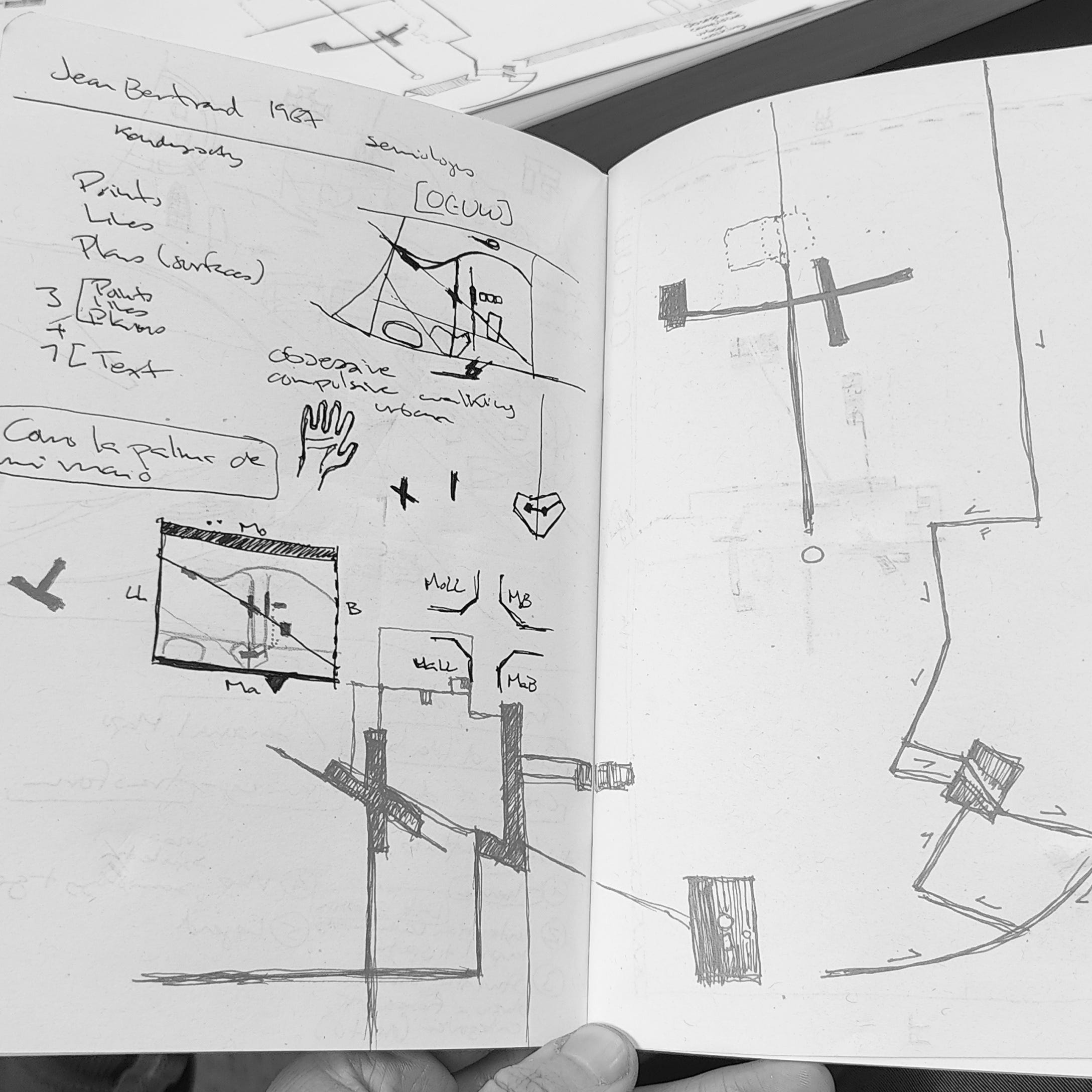
But as the structure of the drawing came into focus, so did something less comfortable: what I was actually mapping was a small, repetitive loop: a set of streets I walk so compulsively it borders on obsession: an obsessive-compulsive pattern in my own urban walking.
Between the origins and destinations of my weekly life, there must be an almost infinite number of ways to get from one place to another. And yet, comfort, habit, and the plain urgency of getting somewhere have narrowed all of that down to a handful of fixed alternatives, repeated on autopilot. I know these routes so well that inertia carries me through them without any real attention: walk straight for two blocks, turn left, wait at the crossing that never quite favors pedestrians over drivers, cross toward the shaded side of the street, arrive almost mechanically, barely present.
I imagine most people experience some version of this. It’s probably the most practical way to move through a city this large, this dense, this saturated with traffic. But the mapping exercise left me thinking about everything I’m missing by never straying from these paths; the other routes, the other streets, the other neighborhoods of the city I supposedly live in. Because if this is all I actually walk, then maybe I don’t live in a city at all. Maybe I just live in a handful of streets that happen to cross a handful of neighborhoods.
What stays with me most from that hour of drawing isn’t the map itself. It’s the discomfort of recognizing a pattern I’d never consciously noticed, and the quieter risk underneath it: mistaking the small circuit I know for the whole city. Believing that the Barcelona I walk is the only Barcelona there is.
I don’t have a tidy resolution for this yet. But I’ve started taking the long way sometimes, on purpose, to see what I’ve been walking past.
The map I drafted in that hour left me with the sense of something I suspect isn’t unique to me, and isn’t really about walking at all. I want to try to put a shape around it, loosely, as a starting point rather than a finished argument.
Obsessive-Compulsive Urban Walking: the collapse of a city’s near-infinite possibility space (every street, every alternative path, every detour available to a body moving through it) into a small, fixed, compulsively repeated set of routes.
The city offers something close to infinite. Any two points can be connected in dozens of reasonable ways, hundreds if you allow for the unreasonable ones. But that abundance is almost never lived. Comfort collapses it. Urgency collapses it. Familiarity collapses it fastest of all, because once a route has worked, trying it any other way starts to feel like a risk rather than a choice. What’s left, after enough repetition, is a private subset of the city; a handful of corridors doing the work that thousands of possible paths could have done, walked with so little resistance that the walking stops registering as a decision at all.
This is the part I think matters most: it’s not really about laziness or lack of curiosity. It’s closer to an economy of attention. The mind, understandably, doesn’t want to re-solve the same problem — how do I get from home to the office, from the office to dinner — every single day. So it stops solving it and starts executing it instead. Efficient, and quietly costly. The cost is that the possibility space doesn’t just go unused; it goes unseen. You stop being able to perceive the alternatives as real, because you’ve stopped generating them as options. The narrowing isn’t a decision you make once; it’s a decision the city and your own habits keep making for you, over and over, until it no longer looks like a decision.
I don’t think Obsessive-Compulsive Urban Walking is a flaw to correct simply; cities this size probably require some narrowing just to be livable. But naming it makes it visible, and visibility is the first condition for choosing it on purpose instead of just falling into it. This feels like the beginning of a longer line of thinking for me; about habit, about the private maps we all carry that never match the official one, about what it would take to actually re-open the possibility to explore space once it’s closed. I want to keep pulling on that thread in future pieces and get closer to getting to know my city even a bit better than the back of my hand.
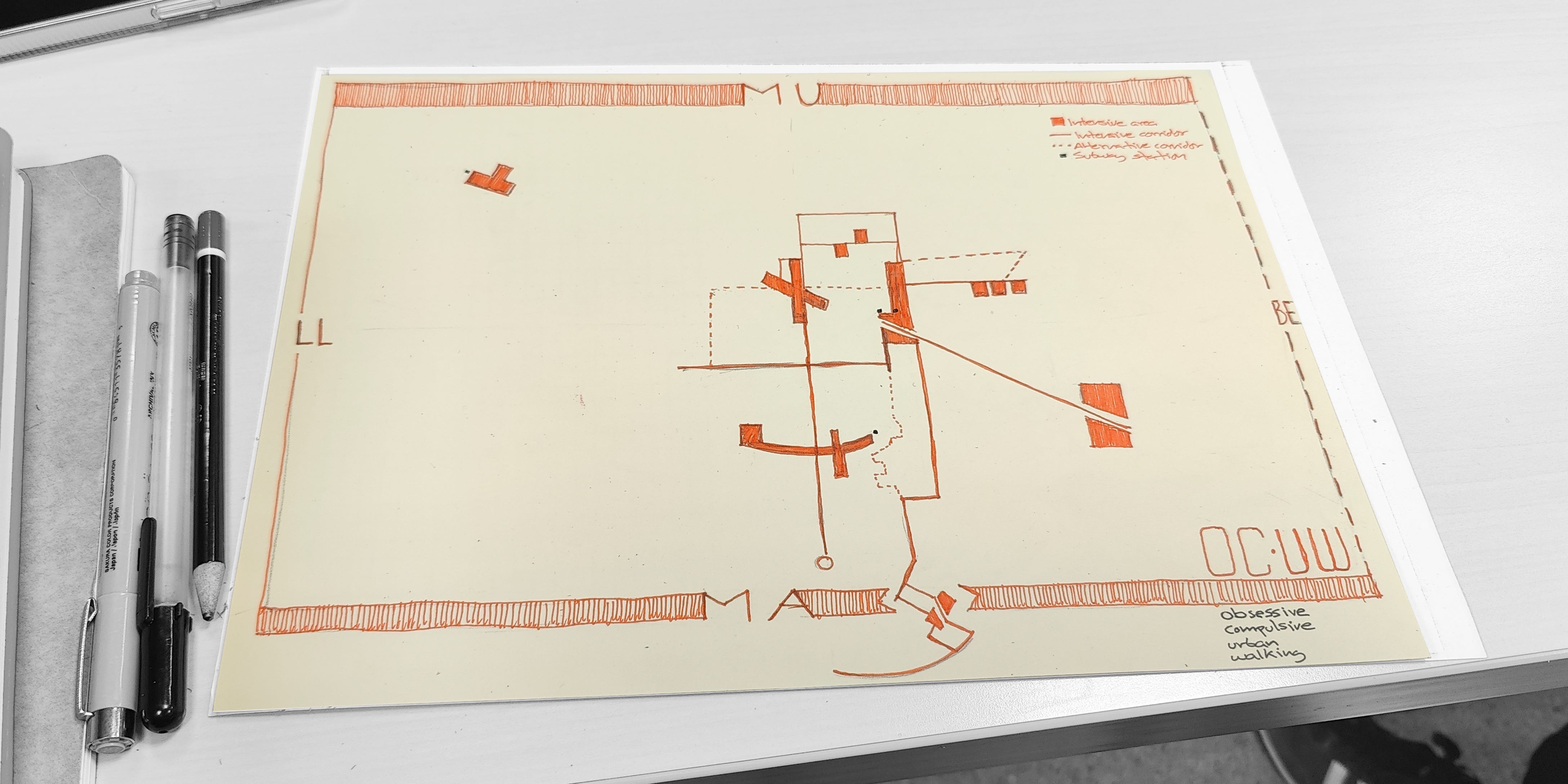
The last photo is my Barcelona Obsessive-Compulsive Urban Walking Map. I hope it continues to grow!